
Service
Comprehensive Children's Vision Assessment
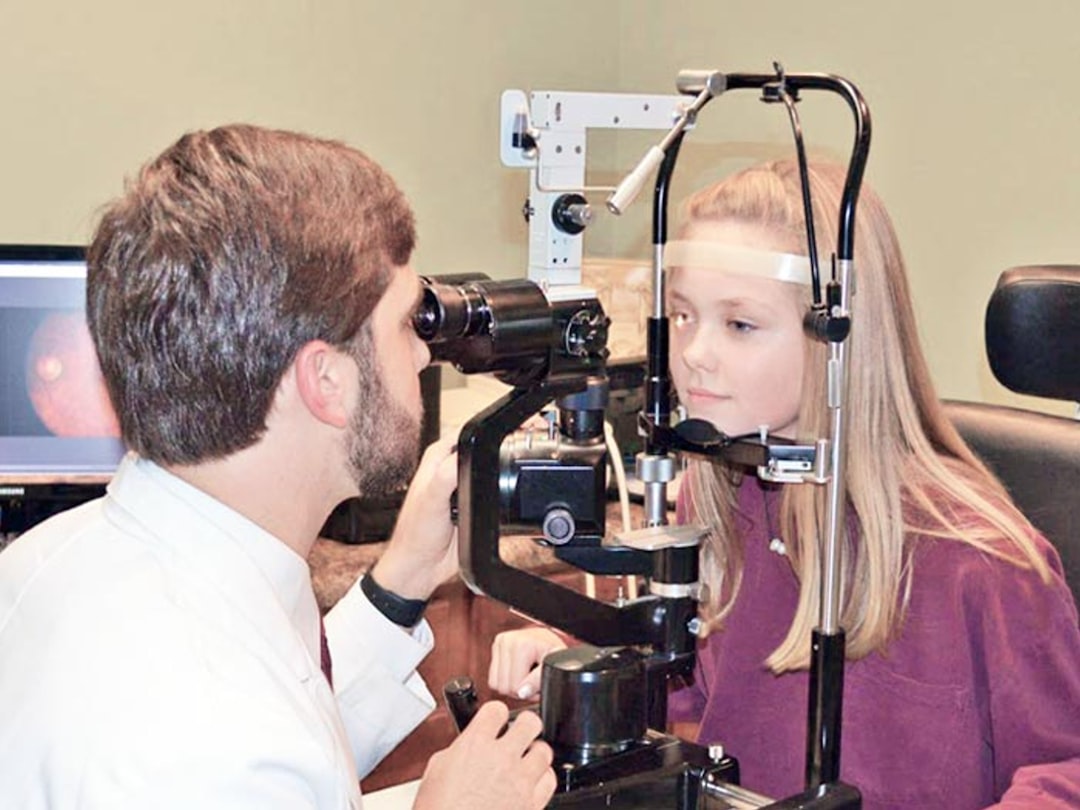
How reading eye movement works
Reading looks smooth from the outside, but underneath, the eyes are doing something more mechanical: they move in short, rapid jumps across a line of text (saccades), landing briefly on a word or a small cluster of words each time. Those brief stops are fixations (fixation points). Most children develop this coordination without anyone teaching it directly, and it happens too fast to notice, dozens of times a line.
Sometimes, that coordination doesn't come together as smoothly. The eyes might skip ahead, lose their place, or need to go back over the same line more than once.
A child can struggle with reading even though their eyesight, tested in the usual way, is perfectly normal.
Checked first, before any specialist testing
Before any specialist testing, Dr Jen checks the foundational visual skills the standard way: acuity, eye teaming, tracking, and focusing. She only brings in the ReadAlyzer 2K once those basics are covered. It's a confirmatory tool for one specific question, how well the eyes move during reading, not a first-line screening test.
ReadAlyzer 2K (Eye Movement Recording System)
The ReadAlyzer 2K looks like a lightweight pair of goggles. A small camera built into the headband records exactly how your child's eyes move while they read. Your child reads age-appropriate passages and answers a few comprehension questions afterwards, so the assessment shows not just how the eyes moved, but whether the reading was actually understood.
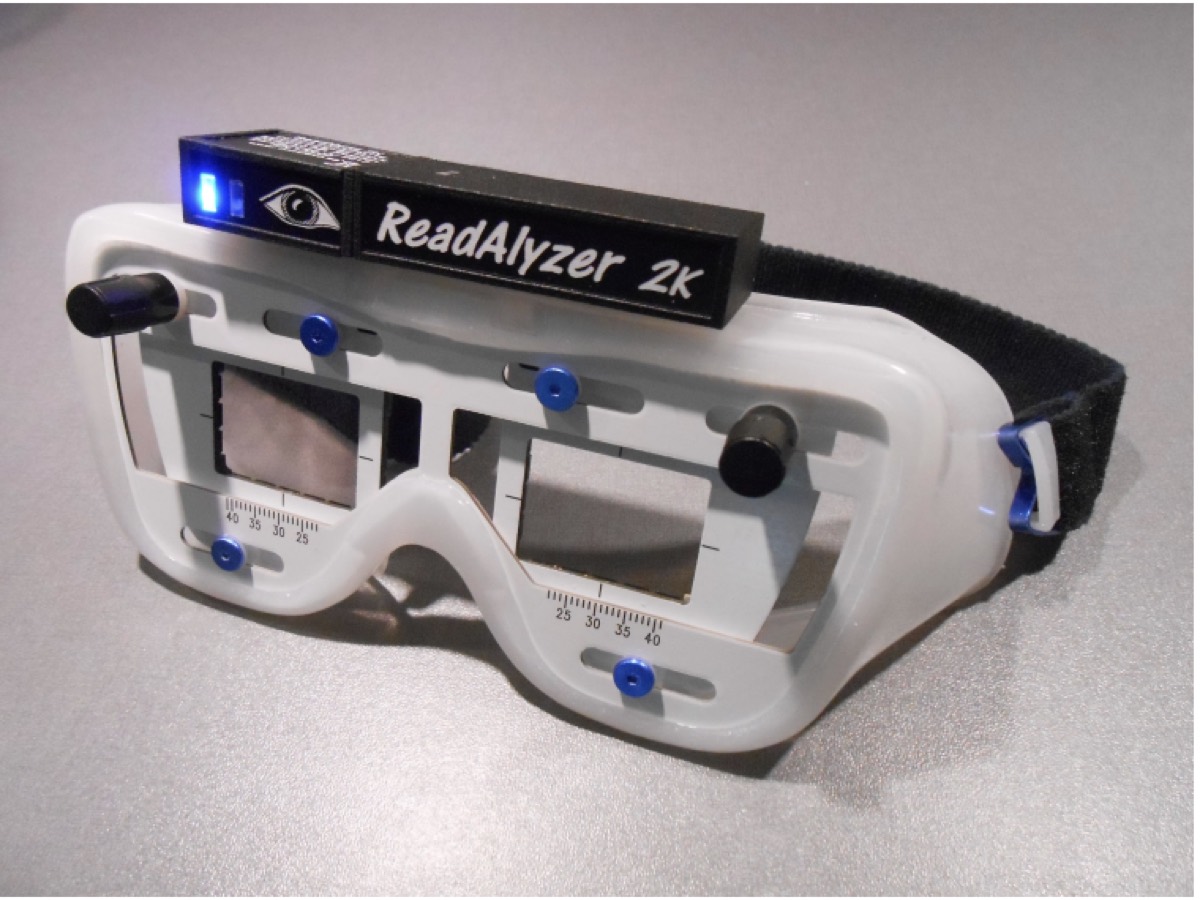
Brought in only after foundational skills are checked. Never a first-line test.
The visual skills involved
Following a line of text smoothly, left to right, without losing place or jumping ahead.
Both eyes working together, aimed at the same point, so the brain receives one clear picture rather than two competing ones.
Shifting focus quickly and comfortably between near and far: the page, then the whiteboard, then back again.
Making sense of what's been seen, recognising and interpreting visual information quickly enough to keep up with a page or a lesson.
These sit under a broader umbrella called Visual Information Processing, how the brain interprets and uses what the eyes take in, beyond simply seeing clearly. If an assessment points to a processing difficulty specifically, the Visual Information Processing Assessment page has more detail on what that involves.
Signs to watch for
Everyday behaviours parents notice at home or hear about from a teacher.
- Skipping or re-reading words and lines
- Losing their place while reading
- Using a finger or ruler to track text
- Avoiding reading tasks where possible
- Headaches or eye strain after reading
- Reading below the level expected for their age
For referring clinicians
What eye-movement data tells you
Eye-movement data adds a layer of specificity a general reading assessment can't. Short, irregular saccades, or an unusually high number of fixations and regressions per line, point to an oculomotor-based reading difficulty, distinct from a language-processing delay or an attention-based cause, both of which can look similar from the outside. Where a child has already been through an OT or speech pathology assessment without a clear explanation, this can be a useful missing piece.
How results are explained
Dr Jen talks parents through the results in plain language at a follow-up appointment: what was measured, what it means, and what happens next, if anything. For referring clinicians, she can provide a structured summary on request, written to sit alongside any other reports you may already have.
Related services
Ready for a comprehensive assessment?
Book online any time, or send a quick question first if you're not sure yet.
Inner West Eye Care is in North Strathfield, seeing patients from across Sydney's Inner West.